


|



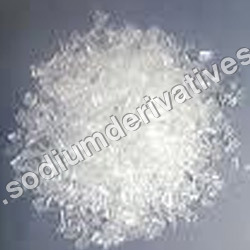
Sodium Thio Sulphate
2 INR/Kilograms
Product Details:
- Ingredients Sodium Thiosulfate Pentahydrate
- Appearance White crystalline powder or colorless crystals
- Shape Crystalline
- Solubility Soluble in water, insoluble in alcohol
- Purity 99% Min
- Taste Cooling, Saline
- Molecular Weight 248.18 g/mol
- Click to View more
X
Sodium Thio Sulphate Price And Quantity
- 2 INR/Kilograms
- as per requirement Kilograms
Sodium Thio Sulphate Product Specifications
- Sodium Thiosulfate Pentahydrate
- Cooling, Saline
- 248.18 g/mol
- White crystalline powder or colorless crystals
- Crystalline
- 99% Min
- Soluble in water, insoluble in alcohol
- Inorganic Salt
- 1.667 Gram per cubic centimeter(g/cm3)
- 48°C (dehydrates)
- Odorless
- 28323010
- Powder, Crystals
- Industrial, Technical, Laboratory
- 25 kg / 50 kg HDPE bags, Jumbo bags
- Ionic compound
- Yields sulfur dioxide, sulfur and oxides of sodium
- Stable under recommended storage
- Not considered hazardous
- Decomposes before boiling
- Max 0.5% (on request)
Sodium Thio Sulphate Trade Information
- 100 Kilograms Per Week
- 1 Week
Product Description
Our extensive range of chemicals includes Sodium Thio Sulphate. These are mainly used in various industries for the treatment of water. Some of the features of these chemicals are accurate composition and safe usage. These are available in the market at competitive prices.
Key Features:
- Purity
- Quality approved
- Stable standards
- Longer shelf life
- Accurate composition
- Free from adulteration
- Hygienically processed
- Completely safe to use
Specification:
| CAS No | 10102-17-7 |
| Formula | Na2S2O3 5H2O |
| Description | White Crystals |
| PH-value (5% Distilled Water) | 5.5-9.0 |
| Chloride (CL) | 0.02% |
| Sulphate& Sulphite (SO4) | 0.1% |
| Sulphide (S) | 0.001% |
| Calcium (CA) | 0.01% |
| Heavy Metals (AS PB) | 0.001% |
| Assay | 99 % |
| Melting point: | 40-45 °C |
| Density | 1.667 g/cm³ |
| Solubility in water | Very Soluble |
| Packing | 50 Kg. Bags |
Versatile Industrial & Laboratory Applications
Sodium Thiosulfate serves various roles in industries such as photographic processing, water dechlorination, chemical manufacturing, and laboratory analysis. Its high purity and consistent crystalline form ensure reliable results and process efficiency for both large-scale industrial setups and smaller technical or research operations.
Packaging & Quality Specifications
To suit diverse requirements, Sodium Thiosulfate is available in 25 kg and 50 kg HDPE bags as well as jumbo bags. With a maximum moisture content of 0.5% upon request and a guaranteed minimum purity of 99%, it meets stringent quality standards while offering stability under recommended storage conditions. Each batch complies with international regulations, including HS Code 28323010.
FAQs of Sodium Thio Sulphate:
Q: How should Sodium Thiosulfate be stored to maintain its quality and stability?
A: Sodium Thiosulfate should be kept in tightly sealed containers and stored in a cool, dry place away from moisture and excessive heat. Following these storage guidelines ensures stability and prevents decomposition or moisture absorption.Q: What are the common uses of Sodium Thiosulfate in industry and laboratories?
A: Sodium Thiosulfate is widely used for photographic fixing, water dechlorination, gold extraction, chemical analysis, and medical applications such as treating cyanide poisoning. Its purity and solubility make it suitable for technical, industrial, and laboratory-grade requirements.Q: When should moisture content be specially considered for Sodium Thiosulfate?
A: Moisture content, which is usually capped at 0.5% upon request, is especially important for sensitive laboratory procedures, storage in humid environments, or industries requiring precise chemical compositions. Requesting low-moisture grades helps maintain product integrity in such scenarios.Q: Where can I source Sodium Thiosulfate with assured quality and correct packaging in India?
A: Reputable distributors, exporters, manufacturers, suppliers, and traders across India offer Sodium Thiosulfate in various packaging options like 25 kg/50 kg HDPE bags or jumbo bags. Always request documentation to ensure industrial, technical, or laboratory grade and compliance with HS Code 28323010.Q: What is the process of Sodium Thiosulfates thermal decomposition?
A: Upon heating, Sodium Thiosulfate decomposes before reaching its boiling point, releasing sulfur dioxide, sulfur, and sodium oxides. Proper ventilation is advised during heating due to the nature of decomposition products.Q: How is Sodium Thiosulfate beneficial in practical usage?
A: Its high solubility in water, stable crystalline form, non-hazardous classification, and versatility across processes make Sodium Thiosulfate valuable in water treatment, chemical synthesis, and laboratory settings, ensuring safety and efficiency for users.Tell us about your requirement

Price:
Quantity
Select Unit
- 50
- 100
- 200
- 250
- 500
- 1000+
Additional detail
Mobile number
Email

Other Products in 'Paint Industries Chemicals' category



GST : 24ABICS0518B1ZV- Plot No 627, 100 Shed Area, GIDC.,Vapi - 396195, Gujarat, India
- Phone :08071780558
-
 Send Inquiry
- Key Personnel
- Mr Nitesh Bharti (Proprietor)
- Mobile :08071780558
 |
SUVIDHI INDUSTRIES
All Rights Reserved.(Terms of Use) Developed and Managed by Infocom Network Private Limited. |
